
⚓ Harbours, Coast & Maritime
Where Land Meets Water
Britain’s harbours, coastal towns and working waterfronts offered John Rees-Jowett a very different architectural landscape.
Here, buildings meet quaysides, boats interrupt the geometry of streets and harbours, and the changing character of sea and sky softens the precise lines of the built environment.
Rees-Jowett’s coastal works capture more than picturesque views. They record harbour walls, waterfront buildings, vessels and communities shaped by their relationship with the sea, preserving the distinctive character of Britain’s maritime places.
From busy working harbours to quieter coastal scenes, these works reveal another side of his artistic eye, where architecture, landscape and water come together.
Explore the Collection
The works below are drawn from the surviving John Rees-Jowett Collection. Further paintings, prints, postcards and associated material will be added as the archive continues to be catalogued and researched.
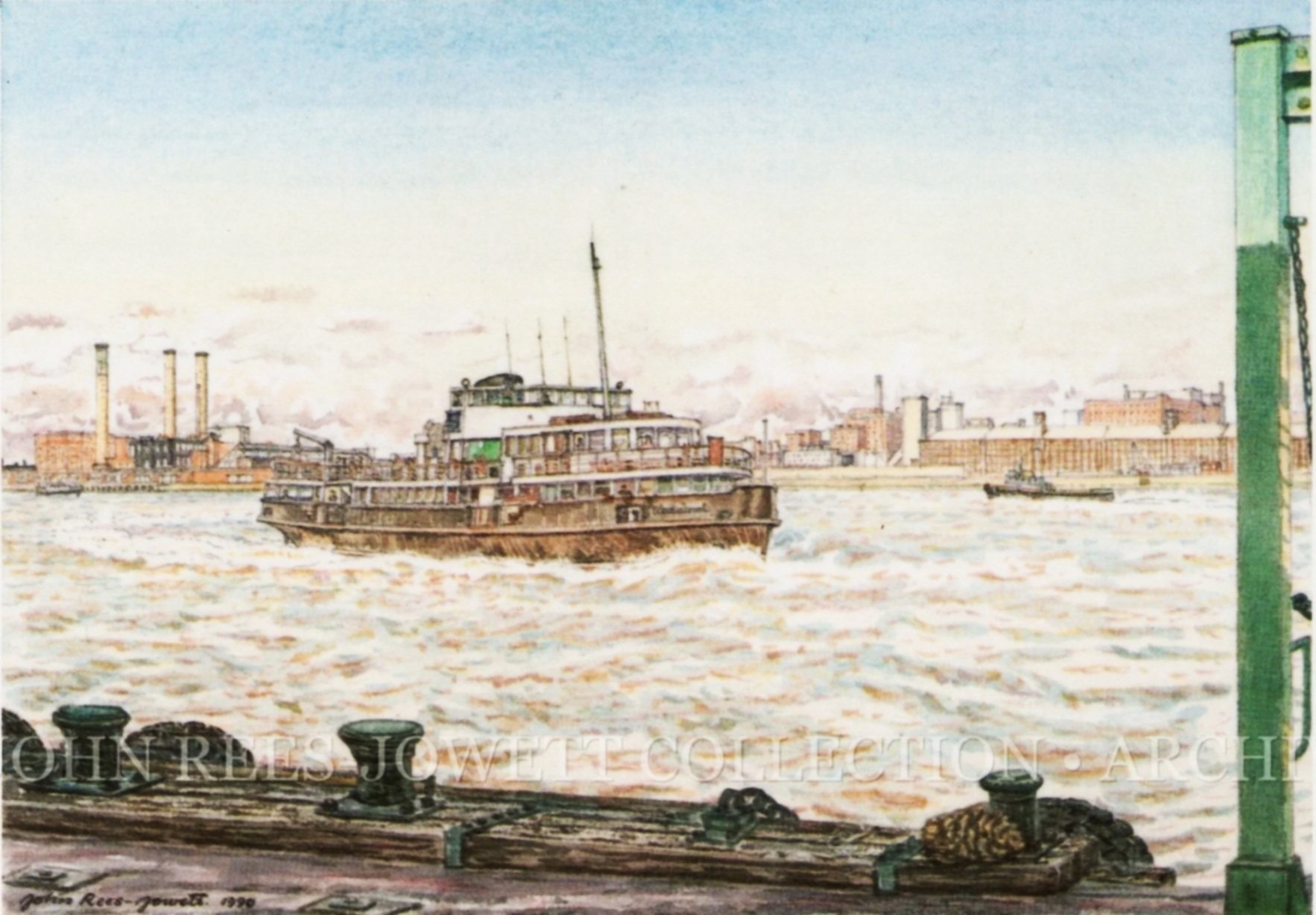
Ferry Crossing the Mersey. Arriving at Seacombe Stage, Wallasey, Wirral. John Rees-Jowett. A familiar Mersey crossing captured in motion, as the ferry approaches Seacombe Stage on the Wirral shore. Rees-Jowett records not simply the vessel, but a scene woven into the everyday life of the river, where water, transport and the waterfront meet. The work preserves a recognisable moment from the Mersey's maritime landscape, turning an ordinary crossing into a small record of place, movement and local history. Original watercolour reproduced as a picture postcard.
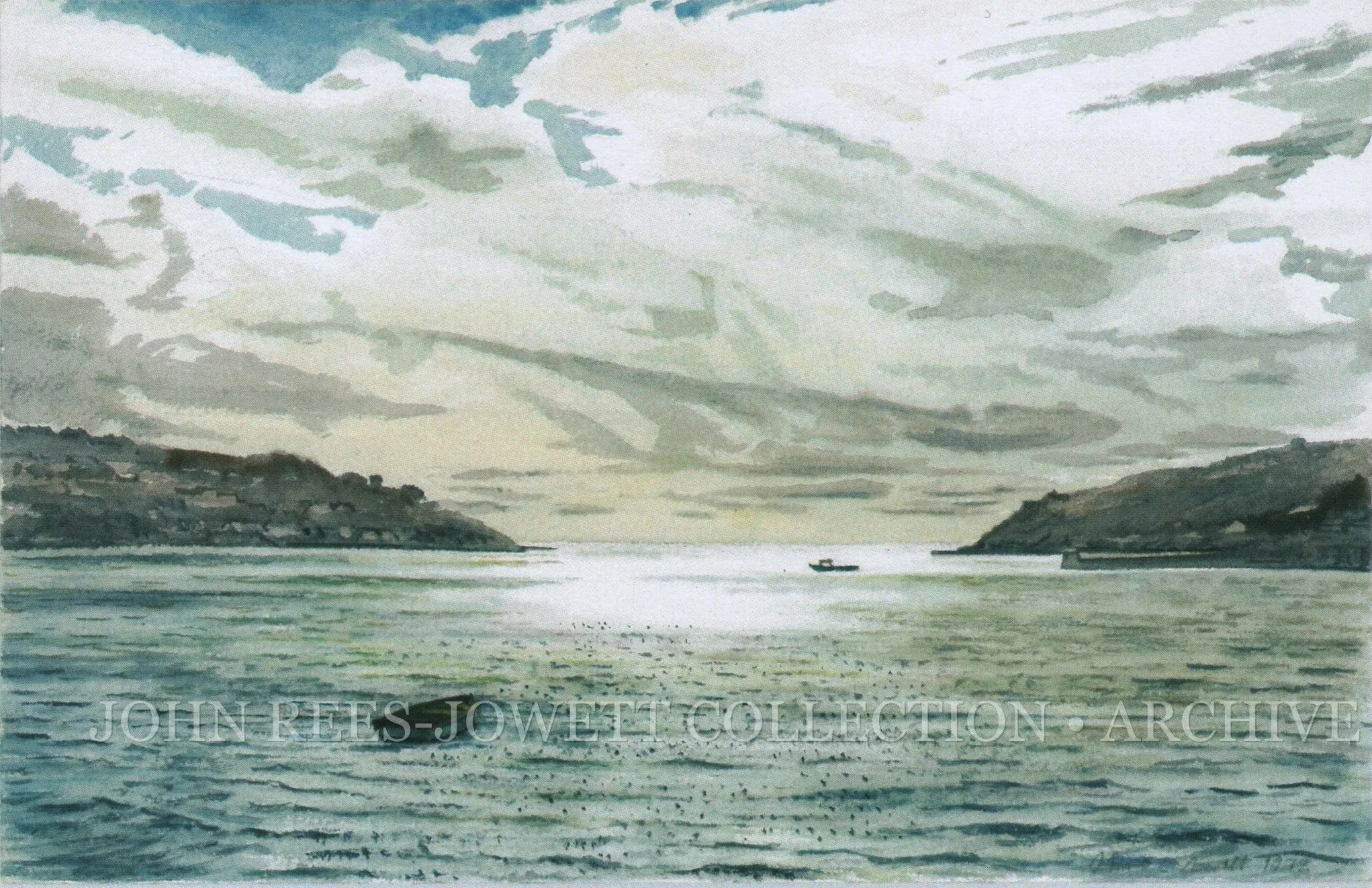
Fowey Estuary Ferry crossing to Polruan, Cornwall. John Rees-Jowett Across the waters of the Fowey Estuary, the ferry makes its familiar passage towards Polruan. Rees-Jowett captures a landscape shaped equally by the sea and by the communities that have grown around it. The crossing brings a quiet sense of movement to the scene, linking the two sides of the estuary and preserving one of those everyday journeys that forms part of Cornwall's maritime character. Original watercolour reproduced as a picture postcard.
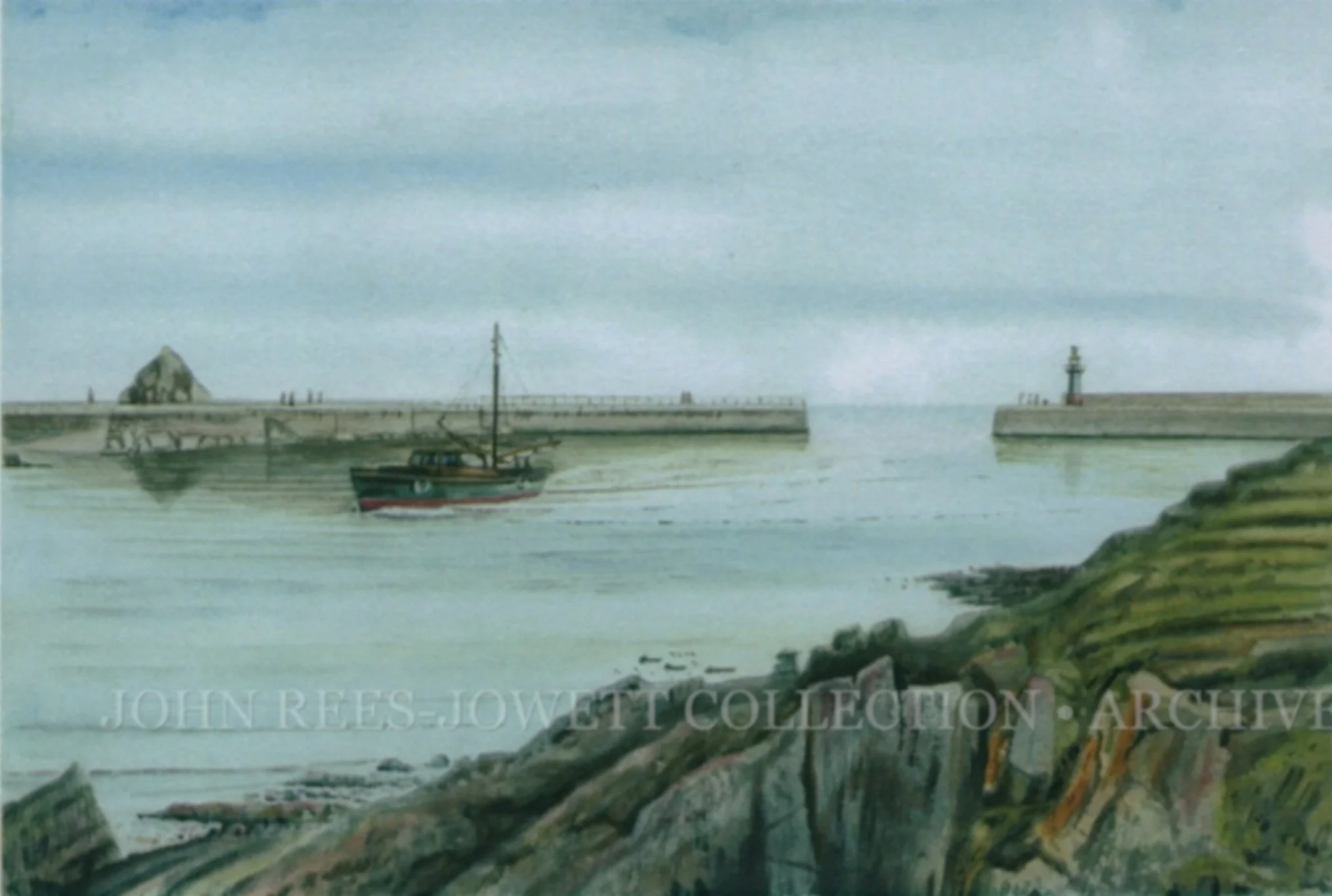
A Fishing Boat Returns. Outer Harbour, Mevagissey, Cornwall. John Rees-Jowett. A fishing boat makes its way back into Mevagissey’s outer harbour, returning from the open water to the shelter of one of Cornwall’s historic fishing communities. Rees-Jowett captures more than the harbour itself. There is a sense of journey and homecoming here, a small working vessel returning to shore within a landscape shaped by generations of life at sea. It is an everyday maritime moment, quietly preserved in watercolour. Original watercolour reproduced as a picture postcard.
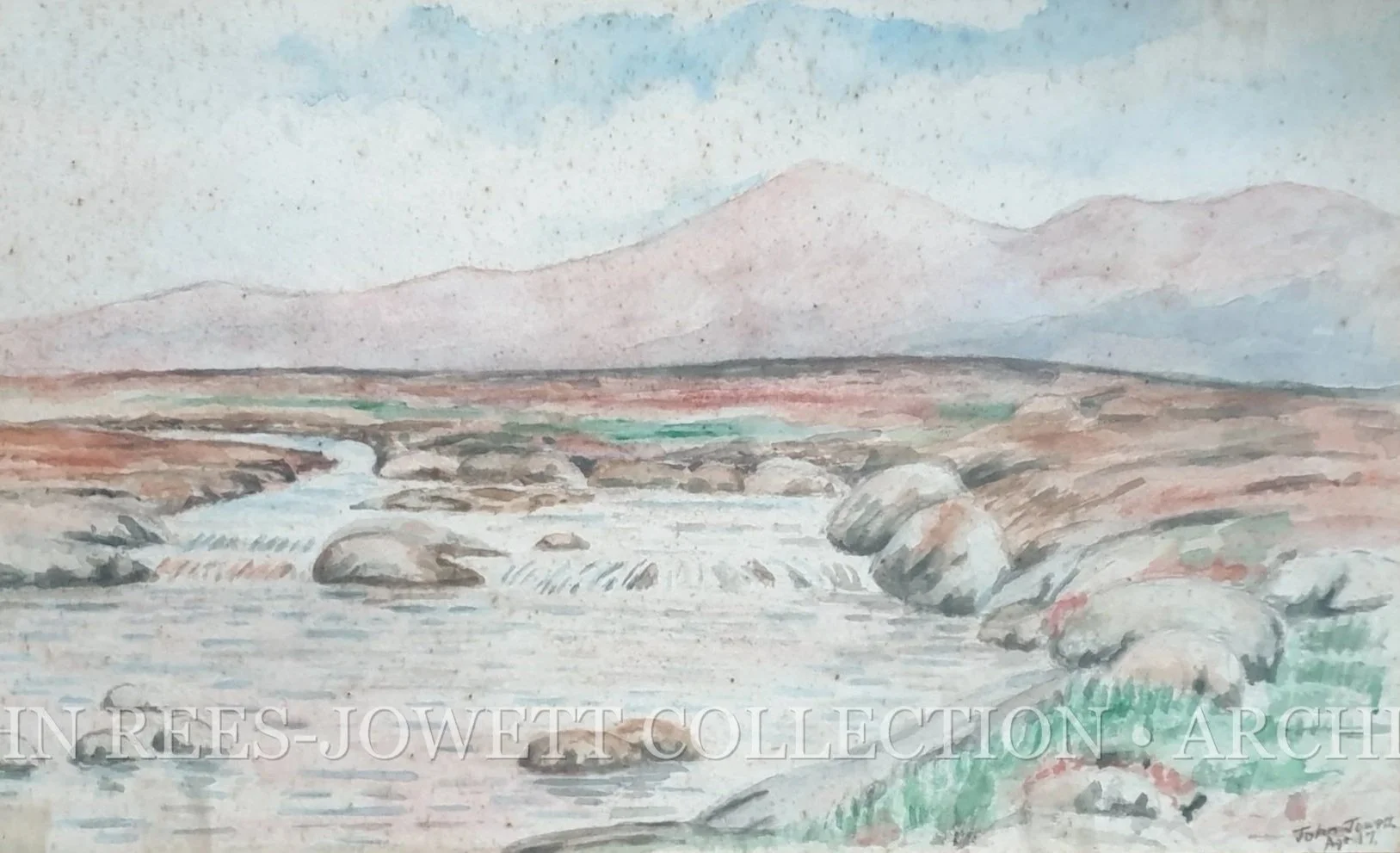
Killarney An early watercolour, painted aged approximately 17. John Rees-Jowett. Painted when Rees-Jowett was still a teenager, this atmospheric view of Killarney, Ireland offers a rare glimpse into the beginnings of an artistic life that would continue for decades. A rocky stream leads the eye towards the distant mountains, rendered in a restrained palette of soft blues, greens and earthy reds. Even at this early stage, there is an evident fascination with place, landscape and the careful observation of the built and natural world that would become so characteristic of his later work. Unlike the architectural subjects for which Rees-Jowett would become particularly prolific, this is quieter and more exploratory. The landscape itself is the subject. Preserved within the John Rees-Jowett Collection, the painting is particularly important because of its early date. Rather than simply showing what Rees-Jowett painted, it helps us begin to see where the journey started. An early work from the formative years of John Rees-Jowett.
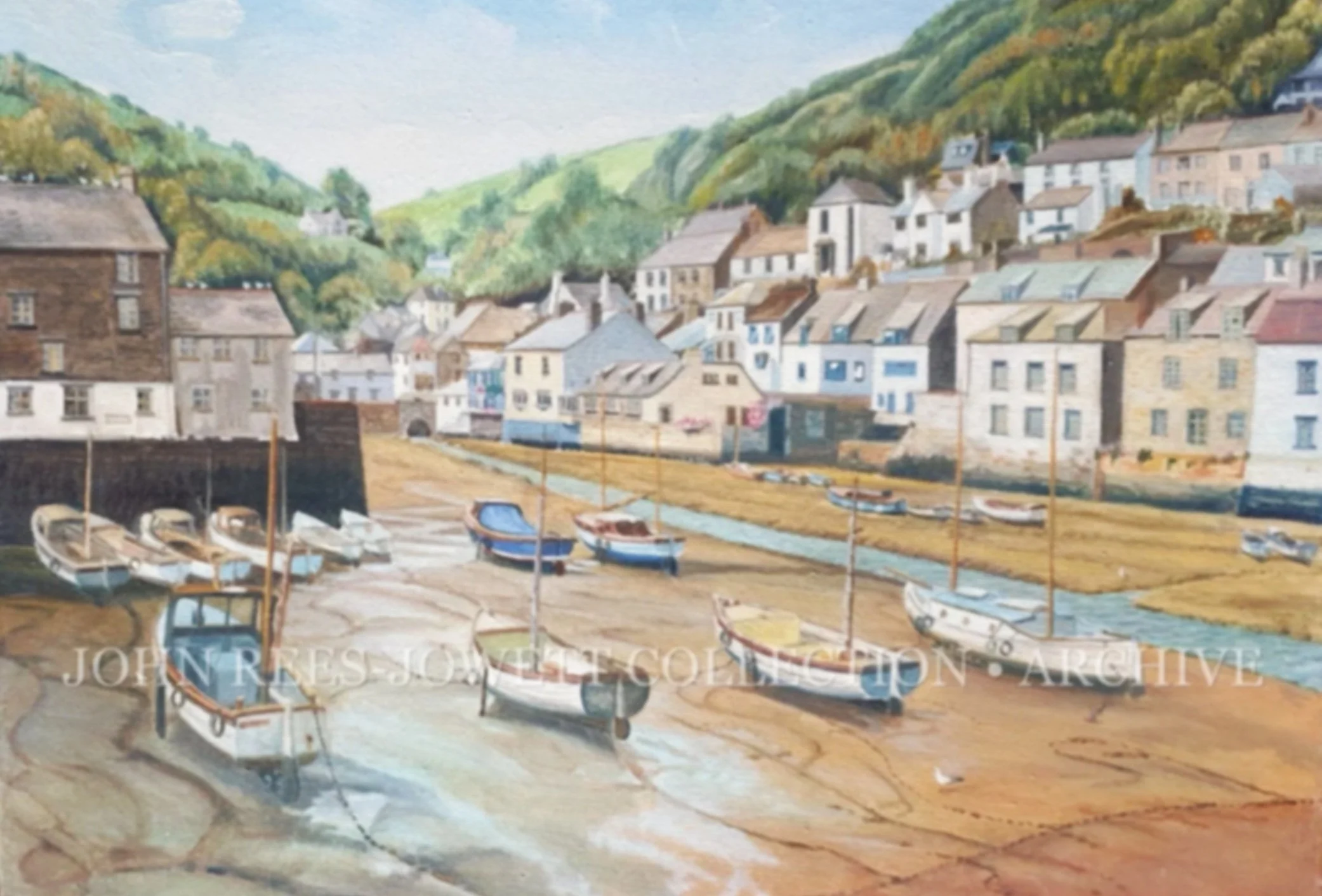
Polperro Harbour. Cornwall, 1968. John Rees-Jowett. Painted in 1968, this beautifully observed view captures Polperro Harbour at low tide, with small fishing boats resting on the exposed harbour floor and the village rising steeply into the wooded Cornish valley beyond. Long before the architectural studies that would come to characterise much of Rees-Jowett's later work, we can already see his fascination with buildings, landscape and the character of place. The jumble of cottages is carefully recorded, yet the harbour retains the warmth and movement of a working coastal community. The low tide is particularly effective. Boats lean quietly on the harbour floor while the empty channel winds between them, giving us a glimpse of Polperro not simply as a picturesque village, but as a place shaped by the rhythms of the sea. Signed and dated 1968, this early work provides an important glimpse into the developing style of John Rees-Jowett. Original painting • Polperro, Cornwall • 1968
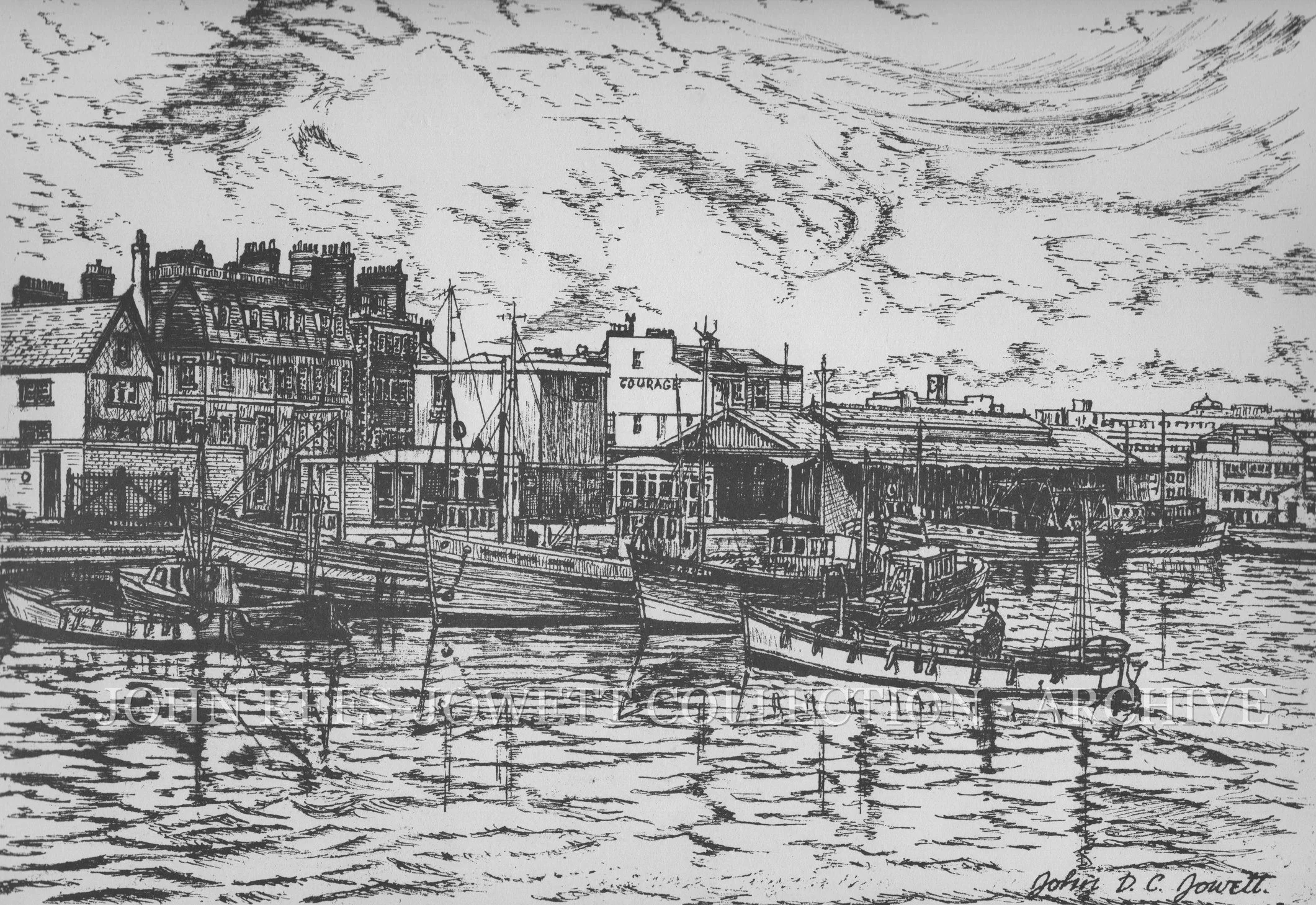
The Barbican, Plymouth. Plymouth, Devon. John D. C. Jowett. A wonderfully intricate study of Plymouth’s historic Barbican, with traditional boats gathered within the harbour and the old waterfront rising densely behind them. Here Rees-Jowett’s architectural eye meets his interest in maritime life. Rigging, hulls, reflections and tightly packed buildings create an unusually busy composition, yet each element is carefully observed. The water itself becomes part of the drawing, broken into hundreds of energetic lines beneath the boats. The Barbican is particularly fitting as a Rees-Jowett subject. Centuries of seafaring history are embedded within its streets and harbour, allowing him to record architecture, history and the working waterfront together in a single scene. Look closely at the lower right and another piece of the artist survives: his handwritten signature, “John D. C. Jowett.” The Barbican • Plymouth • Maritime & Architectural Study